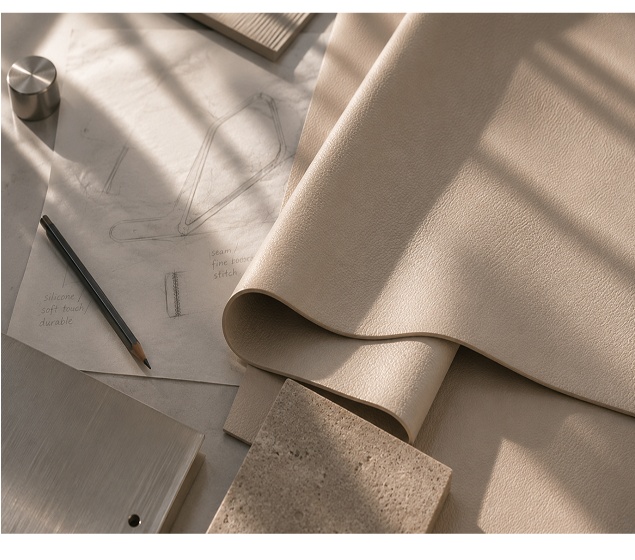
Panels, upholstered objects and interior elements are understood through close-range detail. Grain, edge quality, softness and the way a surface responds to care are immediately visible.
Identify where interaction happens
The material brief should begin with the points people touch most often. Handles, edges, armrests and upholstered panels may need different priorities even when they belong to the same object.
Mapping interaction helps focus performance requirements where they matter.
Connect surface and construction
Forming, stitching, wrapping and edge treatment influence both appearance and durability. A material should be evaluated in relation to the process that gives the object its final shape.
Early mockups can reveal issues that remain invisible in a flat sample.
Coordinate neighboring finishes
Objects often bring several materials together at close range. Grain direction, gloss and undertone should be reviewed beside metal, wood, textile or composite components.
A controlled relationship allows detail to feel intentional rather than decorative.
Plan for everyday use and care
Frequently handled objects need a realistic cleaning and maintenance approach. The routine should fit the location and be simple enough to follow consistently.
Material, construction and care guidance together support a more dependable service life.