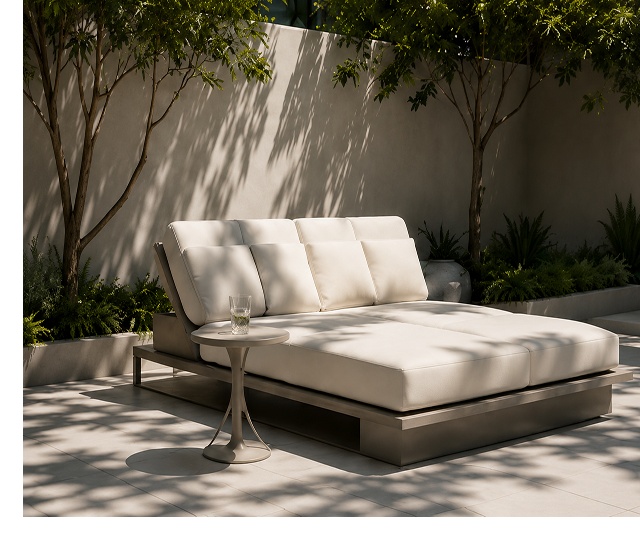
Applications
Outdoor.
Designed for outdoor spaces exposed to sunlight, heat and constant use.
Explore application ↗Applications / Silicone-based materials
Explore how touch, appearance, daily care and exposure shape the material brief.
Find your environment
Start with where the material will be used.
Then explore the requirements behind the surface.
Applications
Designed for outdoor spaces exposed to sunlight, heat and constant use.
Explore application ↗
Applications
Made for public environments where durability meets calm design.
Explore application ↗
Applications
Quiet comfort for spaces designed to welcome and stay remembered.
Explore application ↗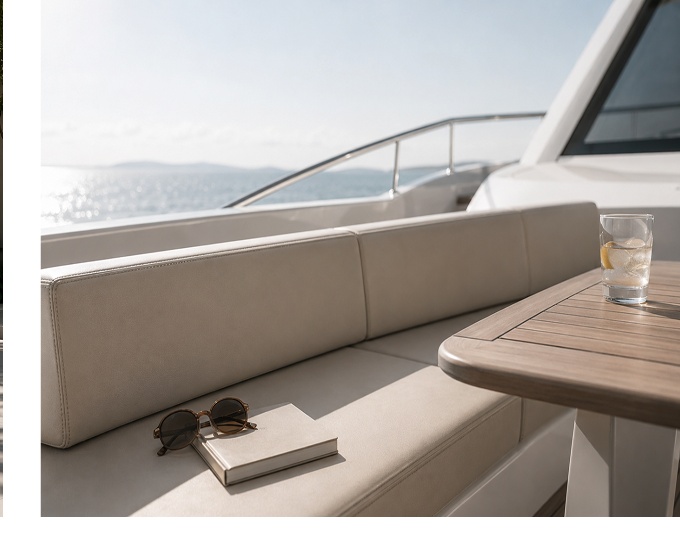
Applications
Material behavior considered for humid, sunlit and high-use environments.
Explore application ↗
Applications
Object and interior surfaces shaped around everyday interaction.
Explore application ↗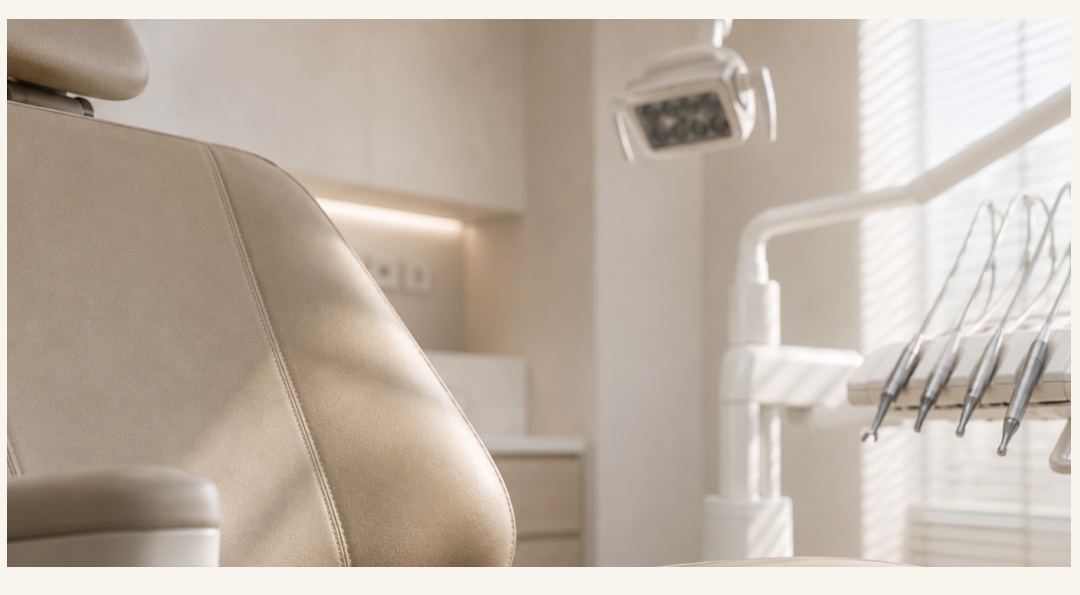
Applications
Materials designed around hygiene, comfort and long-term durability.
Explore application ↗From the product catalog
For specialist products and environments, start with your intended use and required tests.
UV & saltwater exposure; mold, stains, cleaning and slip-resistance needs.
UV stability · ASTM D4329-05; salt spray · ASTM B117Weather, water and stain resistance; easy care, durability and soft touch.
Water resistance is qualitative; UV data is specification-dependent.High-traffic wear, flame-resistance options, colorfastness and cleaning.
120,000 Martindale cycles for selected specifications.UV, heat, odor, scratches and flame-resistance requirements.
FMVSS 302 is a catalog reference; confirm the selected construction.Odor, skin contact, tear resistance, cleaning and material suitability.
Request specimen-specific biocompatibility and other required reports.Disinfectant exposure, water resistance, durability and flame-resistance options.
Discuss actual cleaning agents and the required test conditions.Application directions describe a starting point for discussion. Suitability and supporting reports are confirmed for the chosen specification.
Let’s make it specific
Bring the use conditions, design direction and technical requirements together.